Receipt vs. invoice: what's the difference
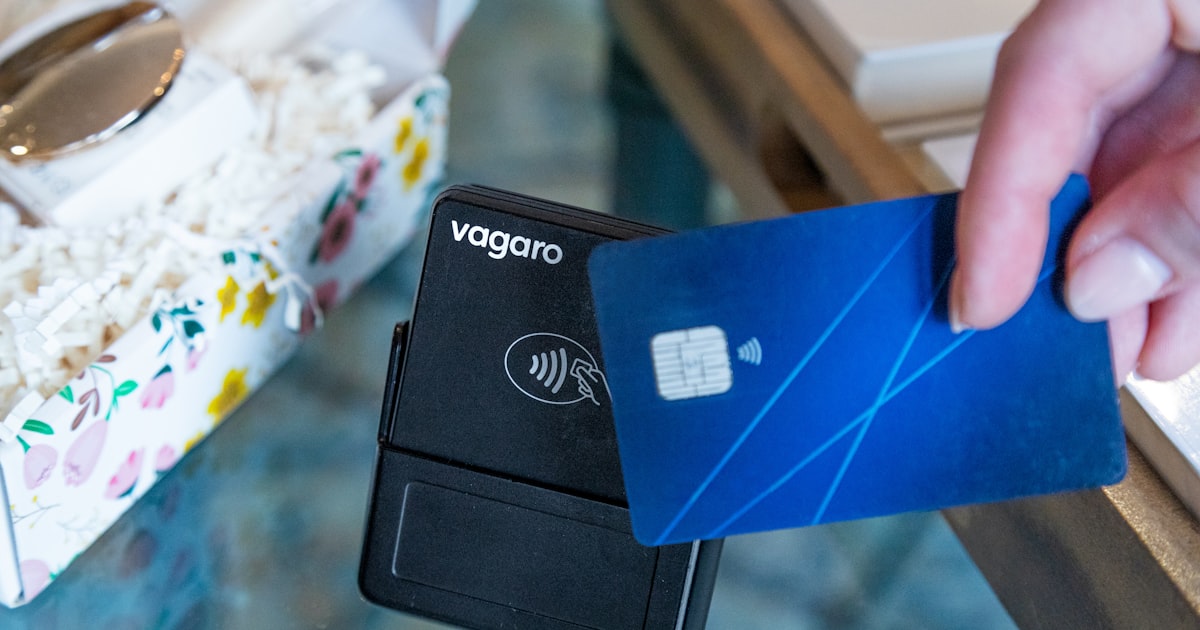
Receipt, till receipt, invoice, tax document, simplified tax document -- there are plenty of terms, and in practice they're often used interchangeably. Yet there are fundamental legal differences between them that affect your tax obligations. Issue the wrong document and you risk trouble with the tax authority. In this article, we'll clearly explain what's what, when you need which, and what rules apply in 2026.
The basic distinction
The key question is whether you are a VAT payer or not. A VAT payer issues tax documents (governed by the VAT Act). A non-VAT payer issues accounting documents (governed by the Accounting Act, or the rules of tax records). An invoice from a non-VAT payer is not a tax document.
Overview of document types
Before we dive into the details, let's get a clear picture of all the document types you may encounter as an OSVČ:
📊Document types under Czech legislation
Receipt (till receipt): what it is and when to issue one
A receipt – or till receipt – is a document you issue for a direct sale to a customer, typically for a cash purchase in a shop, at a market, or when a service is delivered in person.
Receipt from a non-VAT payer
If you are not a VAT payer, your receipt is a simple accounting document (not a tax document). It must include:
- Document designation (e.g. "Cash receipt" or "Receipt")
- Document number
- Description of goods or services
- Date of issue
- Total amount
- Identification of the parties (your name/company)
This document does not allow the buyer to claim a VAT deduction, as it contains no VAT.
Receipt from a VAT payer (simplified tax document)
If you are a VAT payer and sell goods or a service for up to CZK 10,000 including VAT in cash (or by card), you may issue a simplified tax document. In everyday speech this is called a till receipt or receipt.
📋Mandatory requirements for a simplified tax document
What a simplified tax document does not need to include
Unlike a full tax document (invoice), a simplified tax document does not need to contain:
- Buyer identification (name, address, VAT number)
- The tax base and tax amount shown separately (the total amount is sufficient)
- Unit price
This makes it ideal for quick sales in a shop or at a premises.
Invoice: what it is and when to issue one
An invoice is a document you issue primarily for non-cash sales (payment by bank transfer) or for larger amounts. It is more detailed than a receipt and includes full identification of both parties.
Invoice from a non-VAT payer
An invoice from a non-VAT payer is an accounting document -- it contains no VAT and the buyer cannot claim a VAT deduction from it. It should include:
- The designation "Invoice" and an invoice number
- Your identification details (name, address, company registration number)
- Buyer identification (name/company, address, company registration number)
- Description of goods supplied or services provided
- Date of issue and due date
- Total amount payable
- Payment details (bank account number, variable symbol)
- A note: "I am not a VAT payer" (recommended, but not mandatory)
Invoice from a VAT payer (tax document)
An invoice from a VAT payer is a tax document -- it is governed by Section 29 of Act No. 235/2004 Coll. on VAT and has precisely defined requirements.
📋Mandatory requirements for a tax document (invoice from a VAT payer)
Key differences: receipt vs. invoice
Let's now summarise the main differences in a clear table:
📊Receipt vs. invoice: overview of differences
When a receipt is enough and when you must issue an invoice
This is the most common question in practice. Let's break it down by situation:
When a receipt (simplified tax document) is sufficient
- You are selling goods or a service worth up to CZK 10,000 including VAT
- The customer pays in cash or by card on the spot
- The customer does not request a full tax document with their identification
- It is a standard retail sale (shop, café, tradesperson)
When you must issue an invoice (full tax document)
- The amount exceeds CZK 10,000 including VAT (for VAT payers)
- The customer requests a tax document with their identification (typically a business wanting to claim a VAT deduction)
- Payment is made by bank transfer
- It is a B2B transaction (you are supplying another business)
- You are supplying goods or services to another EU member state
The customer has the right to request an invoice
Even for a cash purchase below CZK 10,000, a business customer has the right to request a full tax document (invoice) with their identification. As a VAT payer, you are obliged to issue one. You cannot brush them off with "a till receipt is enough."
Proforma invoice: neither a receipt nor an invoice
A special category is the proforma invoice (advance invoice). This is a document requesting the customer to pay in advance. The key things to know:
- A proforma invoice is not an accounting or tax document
- It is not recorded as revenue or for VAT purposes
- It serves solely as a payment request
- Once payment is received, you must issue a proper tax document (invoice)
- A proforma invoice is often confused with a deposit invoice, but they serve the same purpose
Issue a tax document upon receiving an advance payment
If you are a VAT payer and receive a payment on the basis of a proforma invoice, you must issue a proper tax document for the advance payment received within 15 days. VAT is declared as of the date of payment, not the date the proforma invoice was issued.
Sales reporting and documents in 2026
Status of electronic sales reporting (EET) in 2026
The electronic sales reporting system (EET) was abolished on 1 January 2023. In 2026, a modernised version (so-called EET 2.0) is being prepared, expected to take effect from 2027. As of now (February 2026), you have no obligation to report sales electronically.
That said, this does not mean you don't need to issue documents. The obligation to issue receipts and invoices stems from the Accounting Act and the VAT Act – these obligations apply regardless of EET.
What will change with EET 2.0
Based on available information, the new version of EET is expected to:
- Be less burdensome for small sole traders
- Use more modern technology
- Take effect from January 2027
Prepare for EET 2.0
Even though EET doesn't apply in 2026, it's sensible to prepare for its return. Digitalise your document records and issue documents electronically. When EET 2.0 comes into force, you'll already be one step ahead.
VAT deduction from a receipt: is it possible?
A common question from business owners: can I claim a VAT deduction from a receipt (till receipt)?
Deduction from a simplified tax document
Yes, you can claim a VAT deduction from a receipt issued by a VAT payer (a simplified tax document). However, there are conditions to be aware of:
- The document must be issued by a VAT payer (it must contain the supplier's VAT number)
- It must contain all required elements of a simplified tax document
- The total amount must not exceed CZK 10,000 including VAT
- The supply must relate to your business activity
How to calculate VAT from a receipt
A simplified tax document does not need to show the tax base and VAT amount separately – the total amount and the rate are sufficient. You can calculate the VAT yourself:
Calculating VAT from the total amount on a receipt
Formula for calculating VAT from an amount inclusive of VAT:
VAT = total amount × VAT rate / (100 + VAT rate)
Example 1: receipt for CZK 500 (rate 21%):
- VAT = 500 × 21 / 121 = CZK 86.78
- Tax base = 500 − 86.78 = CZK 413.22
Example 2: receipt for CZK 1,200 (rate 12%):
- VAT = 1,200 × 12 / 112 = CZK 128.57
- Tax base = 1,200 − 128.57 = CZK 1,071.43
Example 3: receipt for CZK 8,500 (rate 21%):
- VAT = 8,500 × 21 / 121 = CZK 1,475.21
- Tax base = 8,500 − 1,475.21 = CZK 7,024.79
When a VAT deduction from a receipt is not possible
- The receipt is from a non-VAT payer -- it contains no VAT, so there is nothing to deduct
- The receipt is missing required elements (no supplier VAT number, no VAT rate)
- The amount exceeds CZK 10,000 -- you need a full tax document
- The purchase is unrelated to your business activity
Retaining receipts and invoices
All documents must be retained for the period required by law:
| Document type | Retention period | Legal basis |
|---|---|---|
| Tax documents (invoices, receipts from VAT payers) | 10 years | VAT Act, Section 35a |
| Accounting documents | 5 years | Accounting Act, Section 31 |
| Documents for OSVČ tax records | 5 years | Income Tax Act |
| Payroll records and related documents | 30 years | Act on the Organisation and Implementation of Social Security |
Digital retention is fully recognised
Since 2022, digital (electronic) retention of documents is fully equivalent to paper retention. You can scan or photograph documents and shred the paper originals. The key requirement is that the documents remain legible, unaltered, and accessible throughout the entire retention period.
Real-life situations for OSVČ
Situation 1: A tradesperson repairs a kitchen for CZK 8,000
Martin is a plumber (VAT payer). He repaired a customer's tap for CZK 8,000 incl. VAT. The customer pays cash on the spot.
Solution: Martin issues a simplified tax document (receipt). The amount is below CZK 10,000 and the payment is in cash. If the customer requests an invoice (e.g. they are a business owner wanting a VAT deduction), Martin must issue a full tax document.
Situation 2: A graphic designer invoices for a logo at CZK 25,000
Petra is a graphic designer (VAT payer). She designed a logo for a company for CZK 25,000 + VAT. The client pays by bank transfer.
Solution: Petra must issue a full tax document (invoice). The amount exceeds CZK 10,000 and payment is by bank transfer. The invoice must contain all required elements under Section 29 of the VAT Act.
Situation 3: A programmer (non-VAT payer) invoices CZK 45,000
Jakub is a programmer (non-VAT payer, annual turnover below CZK 2 million). He delivered a web application to a client for CZK 45,000.
Solution: Jakub issues an invoice (accounting document). The invoice contains no VAT. It is recommended to include a note such as "I am not a VAT payer" or "Individual not registered for VAT." The client cannot claim a VAT deduction from this invoice.
Situation 4: A café sells a coffee for CZK 85
Lucie runs a café (VAT payer). A customer buys a coffee for CZK 85 and pays by card.
Solution: Lucie issues a simplified tax document (a receipt printed from the till). The amount is well below CZK 10,000 and customer identification is not required.
VAT rates in 2026
To issue documents correctly, it's important to know the current VAT rates:
| Rate | Amount | Examples |
|---|---|---|
| Standard | 21% | Most goods and services, electronics, clothing |
| Reduced | 12% | Food, non-alcoholic beverages, books, medicines, accommodation, residential construction work |
| Exempt | 0% | Postal services, financial activities, insurance, healthcare services |
VAT rate changes from 2024
From 1 January 2024, the Czech Republic has two VAT rates: a standard rate of 21% and a reduced rate of 12%. The two previous reduced rates (15% and 10%) were merged into a single rate of 12%. This structure also applies in 2026.
Frequently asked questions (FAQ)
Do I need to issue receipts as an OSVČ?
If you are a VAT payer and accept cash payments, you must issue at least a simplified tax document (receipt) for every sale. If you are not a VAT payer, you have no statutory obligation to issue a receipt for every sale, but you must record all income.
Can I issue an invoice instead of a receipt?
Yes, always. An invoice (full tax document) contains more information than a receipt and is acceptable in every situation. The reverse is not true -- where a full tax document is required, a receipt is not sufficient.
Is a "paragon" the same as a receipt?
Yes, in everyday speech the terms "paragon" and "receipt" are used interchangeably. Formally, it is a simplified tax document (for a VAT payer) or an accounting document (for a non-VAT payer).
What if a customer loses their receipt and wants a new one?
You can issue a copy (duplicate) of the document, marked "COPY" or "DUPLICATE." Never issue a new document with the same content -- this would create a duplicate entry in your records.
Can I issue a receipt electronically (by email)?
Yes. An electronic document is fully equivalent to a paper one. You can send a receipt or invoice by email in PDF format. The key requirement is that the document contains all mandatory elements.
How do I tell whether a receipt is a tax document?
A tax document must contain the supplier's VAT number (a number in the format CZ12345678). If a receipt does not include a VAT number, it is not a tax document and a VAT deduction cannot be claimed from it.
Clear document management with DokladBot
Keeping track of all the different document types can be confusing. Receipts, invoices, tax documents -- each has different requirements and different rules. DokladBot helps you stay on top of it all.
DokladBot identifies the document type for you
Just take a photo of a receipt or invoice and send it via WhatsApp. DokladBot automatically identifies the document type, checks that all required elements are present, and files it in the right category. You get a complete overview of all your documents in one place -- no paperwork, no chaos.
Try DokladBot at dokladbot.cz -- your smart assistant for document management.
Useful links to official sources
- Czech Financial Administration -- information on tax documents
- Act No. 235/2004 Coll. on VAT -- tax document requirements (Sections 26–35a)
- MOJE daně portal -- electronic submissions
- Czech Financial Administration -- information on sales reporting
This article is for informational purposes only and does not substitute professional tax advice. Legislation may change -- always verify the current wording of the relevant laws. Last updated: February 2026.
Nechcete ztrácet čas s papírováním?
Vyzkoušejte DokladBot - účetnictví přes WhatsApp. První týden zdarma.
Related articles
Debt Recovery 2026: Interest, Compensation, and the Procedure
A client hasn't paid an invoice and has stopped communicating? By law you're entitled to default interest of 11.75 % per year and flat compensation of 1,200 Kč. Here's a practical debt recovery procedure for 2026, from the first reminder to a payment order.

Invoicing Germany: E-Invoicing Becomes the Standard from 2027
Germany is the Czech Republic's largest trading partner, and from 1 January 2027 it introduces mandatory issuing of structured e-invoices for companies with turnover above 800,000 EUR. Czech legislation doesn't directly apply to you, but your German customers do. We summarise exactly what applies, which formats Germany recognises, and what to watch out for as a Czech supplier this year.
Invoice in a Foreign Currency 2026: How to Correctly Convert the Exchange Rate
Invoicing in euros or dollars? Here is when to use the daily CNB exchange rate and when the annual fixed rate, how VAT conversion works based on the taxable supply date, and what must appear on a foreign currency invoice.